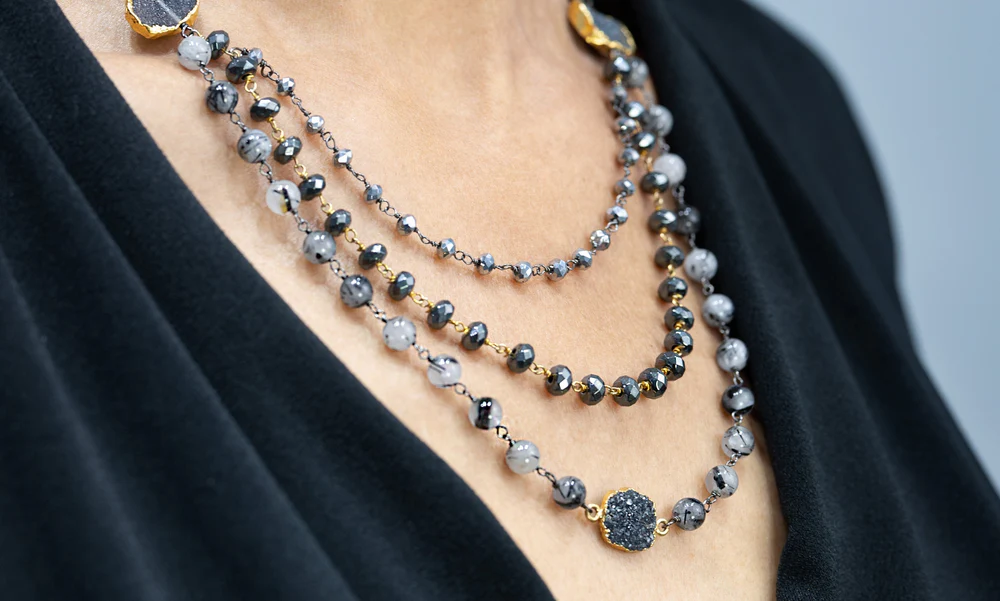
Layered jewellery is not an accident. It looks effortless because someone made specific choices before leaving the house. The stacking trend has become one of the most sustained movements in fine jewellery. In Australia, demand for stackable rings in Australia has grown sharply as women move away from single statement pieces and toward curated, personal combinations. This article explains the real principles behind layered jewellery styling so you can build a look that reads as intentional without looking overworked.
Why Has Layered Jewellery Become the Everyday Standard?
The shift started around 2018 and accelerated during the pandemic years. When people stopped dressing for offices and events, they started dressing for themselves. Jewellery followed. Stacking multiple fine rings, layering delicate necklaces, mixing metals became a form of daily self-expression with no dress code to answer to.
The fine jewellery market in Australia was worth approximately AUD $2.5 billion in 2023. Stackable and layering-focused pieces now represent one of the fastest-growing segments within it. Consumer research shows that Australian women between 25 and 44 are the primary buyers, with 67% purchasing stackable rings specifically to add to existing combinations rather than as standalone pieces.
What Is the First Rule of Ring Stacking?
Start with a foundation piece. This is the ring that everything else responds to. It might be your engagement ring, a bold signet or simply the widest band in your collection. Everything you add should complement it, not compete with it.
A common mistake is stacking pieces of equal visual weight. Five similar rings worn together create noise. They all ask for attention at the same time. Instead, vary the width, texture and stone size across your stack. One thicker band, two or three thin bands, one ring with a stone detail. That hierarchy is what makes the combination look curated.
Should You Mix Metals When Stacking?
Yes. This was considered a style error twenty years ago. It is now one of the most recommended approaches in contemporary jewellery styling. Mixing yellow gold, white gold and rose gold in a single stack adds dimension. It also means your existing collection is always usable together rather than siloed by metal colour.
The rule that replaced the old one is about texture. Mixing polished and matte finishes in the same metal creates visual interest without requiring a colour contrast. A brushed yellow gold band next to a polished yellow gold signet works because the contrast is tactile rather than chromatic.
How Many Rings Are Too Many?
There is no fixed number. There is a fixed principle. If each ring is still legible, the stack is working. If the rings are merging into one undifferentiated band of metal, you have gone too far.
Most jewellery stylists recommend between two and five rings across both hands as a starting point for everyday wear. Beyond that, you are making a statement that requires intention. Proportion also relates to your hand and finger size. Thinner fingers carry thinner bands more elegantly. Wider fingers support chunkier stacks without being overwhelmed.
What Stone Types Work Best in a Stack?
Diamonds remain the dominant choice for fine stackable rings. Their hardness rating of 10 on the Mohs scale means they resist daily wear better than almost any other gemstone. Small diamond bands, eternity rings and half-eternity designs are built specifically for stacking.
Coloured stones add personality. A thin band with a single sapphire, an emerald or a ruby creates a colour accent that elevates everything around it. The key is keeping the stone small enough that it reads as an accent rather than a focal point when worn within a stack. Textured plain bands and hammered finishes provide contrast against smooth stone-set rings.
How Do You Build a Stack Over Time?
Incrementally. A stack assembled piece by piece over months or years tells a more interesting story than one bought as a set. Each ring marks something. A birthday, a trip, an occasion worth remembering.
Start with two rings that work together. Wear them for a week. Notice what they need. Maybe a thinner band to break the visual gap. Maybe a texture to contrast the smooth metal. Add based on what is missing, not based on what is available. The best stacks look personal because they are personal. They are not copied from a shop display. They are built from genuine choices made over time.